
Getting to Know Ants
Ants rank among the most widespread insects on the planet, turning up in nearly every region people inhabit. Although thousands of species exist, they all share a handful of traits: a three-part body made up of a head, thorax, and abdomen, six legs, and a pair of bent antennae. Compared to the rest of their tiny frames, those legs and antennae look unusually long. Most measure somewhere between a sixteenth and a half of an inch and come in shades of black, brown, or reddish.
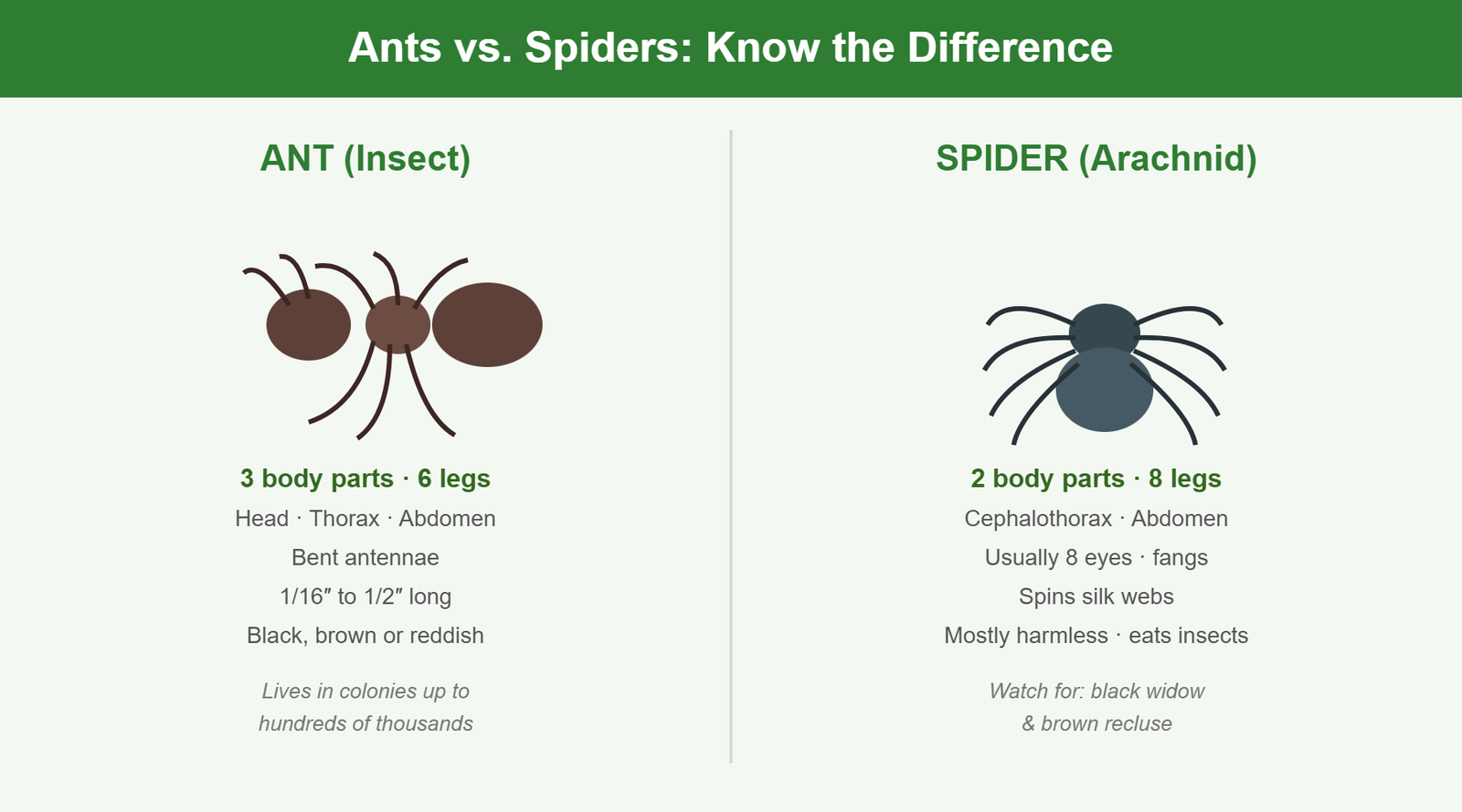
What makes ants such frequent household visitors is their habit of nesting close to food and moisture, two things our homes supply in abundance. They are deeply social creatures, living in colonies that can swell into the hundreds of thousands. Every ant has a defined role: female workers gather food, expand the nest, and tend to the young; males exist mainly to mate; and the queen spends her days laying eggs to keep the colony growing.
Where Ants Build Their Homes
Because they tolerate almost any climate, ants establish nests both outdoors and inside structures. Outside, the entrance often shows up as a small mound of loose dirt or sand. Indoors, colonies may settle within wall cavities or around a home’s foundation. Wherever they choose, they favor spots that sit near food, water, and shelter from weather and predators.
Common Ant Species in U.S. Homes
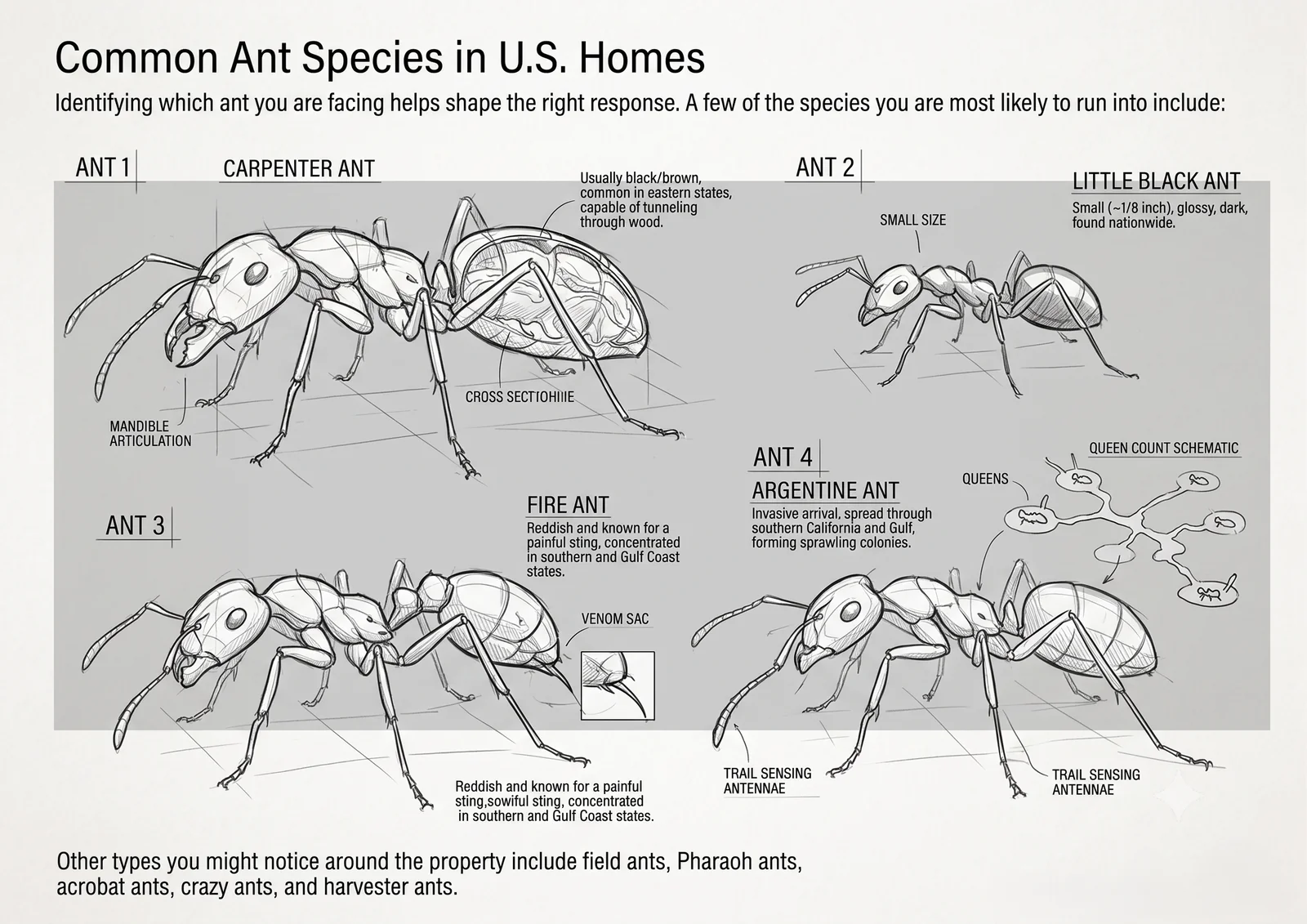
Identifying which ant you are facing helps shape the right response. A few of the species you are most likely to run into include:
- Carpenter ants — usually black or brown, common across the eastern states, and capable of tunneling through wood.
- Little black ants — small, glossy, and dark, roughly an eighth of an inch long, found nationwide.
- Fire ants — reddish and known for a painful sting, concentrated in southern and Gulf Coast states.
- Argentine ants — an invasive arrival that spread through southern California and the Gulf region, forming sprawling colonies.
Other types you might notice around the property include field ants, Pharaoh ants, acrobat ants, crazy ants, and harvester ants.
Ready for Pest-Free Living?
Call now to be connected with a licensed pest control provider who may assist with inspections, treatment options, and pest management services.
Call Now: (855) 560-1396Signs You May Have an Ant Problem
Ants slip into homes quietly. Many are simply a nuisance, but once they reach an open food container they can swarm it quickly. They mark routes with pheromone trails so the rest of the colony can follow, which means a single scout often signals many more on the way. Watch for steady lines of ants traveling along walls or floors, and keep an eye out for dirt mounds near the house that hint at a nearby nest.
The Damage Ants Can Do
Most ants won’t harm your house, but carpenter ants are a notable exception. By carving tunnels through wood, they can weaken structural elements much like termites do. A telltale clue is small piles of sawdust left behind near their galleries.
A Closer Look at Spiders
Unlike ants, spiders are arachnids rather than insects. They carry eight legs instead of six and a body divided into two sections rather than three. Most spiders are harmless to people and actually help by preying on insects around the home and yard. Their bodies feature a cephalothorax and an abdomen, eight legs, and typically eight eyes, along with fangs linked to venom glands and silk-spinning organs at the rear.
Among the spiders you might encounter are the messy-webbed house spider, the long-legged cellar spider, the fast-moving wolf spider, and two species worth respecting: the black widow, recognizable by its glossy black body and red hourglass mark, and the brown recluse, identified by a violin-shaped marking. If a spider population takes hold indoors, a professional can determine the species and the scope of the problem.
How KR Handles Ants and Spiders
Because colonies can number in the hundreds of thousands, clearing ants completely is tough, and store-bought products often miss the mark on certain species. Spiders, meanwhile, are easiest to keep at bay by sealing gaps, screening windows, clearing wood piles, and reducing the insects they feed on. Our participating providers can identify exactly what you are dealing with, inspect inside and out, and build a treatment plan suited to the species and the situation so you can get back to enjoying your home.
Ready for Pest-Free Living?
Call now to be connected with a licensed pest control provider who may assist with inspections, treatment options, and pest management services.
Call Now: (855) 560-1396