
What Exactly Are Termites?
Termites are small insects, typically under half an inch long, that live in highly organized colonies. A colony can start with as few as two members — a king and a queen — and mature into a population ranging from tens of thousands to over a million, depending on the type. They feed on cellulose, the fibrous material found in wood, paper, and cardboard. While this appetite plays a useful role in nature by recycling nutrients, it spells trouble when the wood in question is holding up your house.
Worldwide there are more than 2,000 termite species. Around 50 live in the United States, and roughly 20 of those are considered structural pests. The three you are most likely to hear about are subterranean termites, found across the country and among the costliest wood-destroying pests; Formosan termites, an especially aggressive group responsible for substantial damage each year; and drywood termites, which, while less destructive than the other two, still cause real harm.
Colony Life and Roles
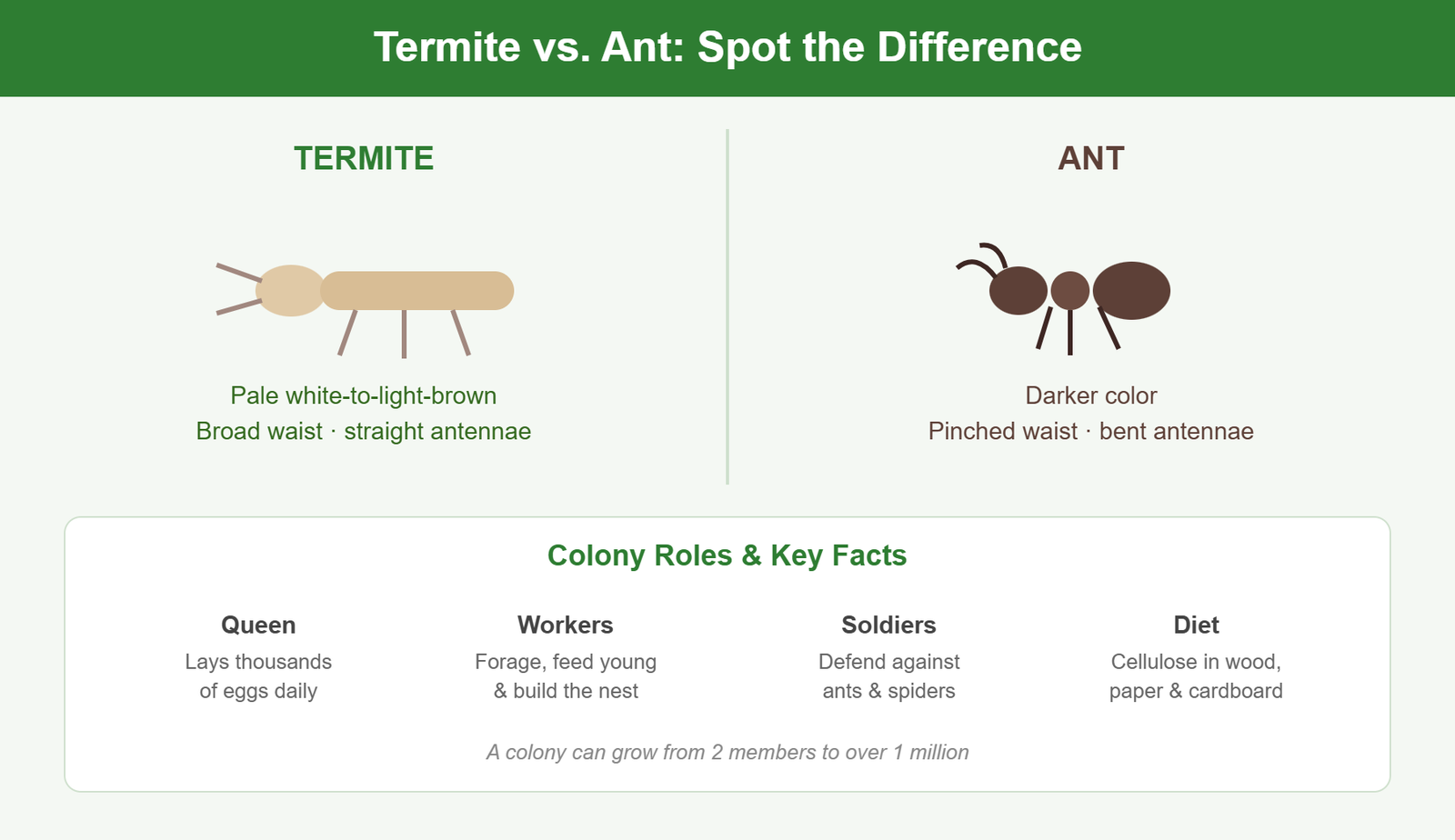
Termite colonies run on a strict division of labor among queens, kings, soldiers, and workers. The queen handles reproduction and can lay thousands of eggs daily, while workers forage, feed the young, and maintain the nest, and soldiers defend against threats like ants and spiders. Individual termites may live anywhere from a couple of years to several decades, and a colony itself can persist almost indefinitely when conditions stay favorable.
How to Tell a Termite Apart
Termites are often confused with ants, but a few features set them apart. They tend to be pale — white to light brown — whereas ants are darker. Their waists are broad rather than pinched, and their antennae are straight instead of bent. Both have six legs, so the waist, color, and antennae are your best identifiers.
Ready for Pest-Free Living?
Call now to be connected with a licensed pest control provider who may assist with inspections, treatment options, and pest management services.
Call Now: (855) 560-1396Warning Signs of an Infestation
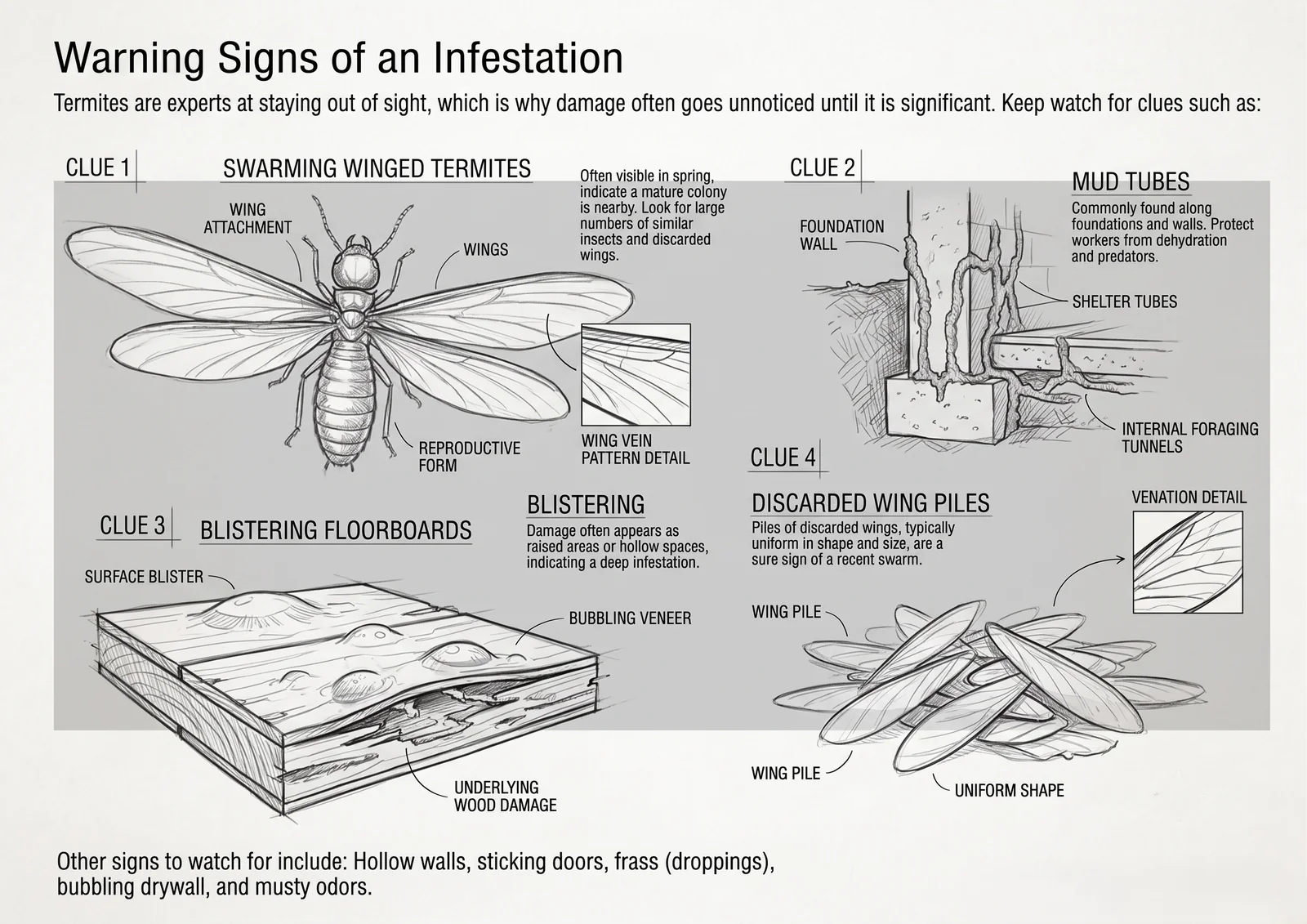
Termites are experts at staying out of sight, which is why damage often goes unnoticed until it is significant. Keep watch for clues such as:
- Floorboards that buckle or feel blistered, and tile that loosens
- Walls that sound hollow when tapped
- Doors and windows that suddenly stick
- Mud tubes running along foundations or walls
- Swarming winged termites, or piles of discarded wings
- Droppings, damaged or bubbling drywall, and faint musty odors
What Draws Termites In
A tidy home won’t necessarily keep termites away — what they’re really after is cellulose and moisture. Damp crawl spaces, soil around the foundation, leaky plumbing, poorly draining yards, and faulty air-conditioning condensation lines all create inviting conditions. Subterranean species in particular gravitate toward moist soil and mulch near the house.
When Termites Are Most Active
Termites can chew through your home all year, but they become most noticeable during swarm season. Subterranean species generally swarm in spring and summer as temperatures climb, while drywood termites often swarm in late summer and fall. During a swarm, mature termites grow wings, leave to start new colonies, then shed those wings once they settle.
Helping Prevent Termites
You can lower your risk by reducing wood-to-soil contact, pulling mulch and dense plantings back from the foundation, fixing moisture problems promptly, and scheduling regular professional inspections.
How KR Handles Termites
Termite warning signs are easy to overlook, and by the time they’re obvious, an infestation may be well established. Getting rid of termites on your own is difficult, especially once the colony has spread. Our participating providers can identify the species at work in your home and design a targeted plan to stop the damage before it grows worse.
Ready for Pest-Free Living?
Call now to be connected with a licensed pest control provider who may assist with inspections, treatment options, and pest management services.
Call Now: (855) 560-1396